Three cars can leave a Charlotte tint shop looking equally dark and behave completely differently in August sun. Shade is what you see. Film construction is what you feel, and it is where ceramic, carbon, and dyed films separate. Choosing by darkness alone is the most common mistake, because North Carolina law limits how dark front windows can go anyway, so the legal shade range is narrower than many drivers expect.
This decision guide for customers of Underground window tinting compares the three main film families by heat rejection, fading, and electronics, so you can match the film to how you actually use the car.
What each film is made of
Dyed film is the entry construction: a layer of dye in the film absorbs some light and gives the dark look. It is the most likely to fade toward purple over years of sun, because the dye itself breaks down. Carbon film replaces dye with carbon particles, which hold color better and reject more heat without the reflective look of older metal films. Ceramic film uses ceramic nanoparticles that target infrared heat while letting visible light pass, so a lighter ceramic shade can reject heat comparable to a darker lower-tier film.
None of these constructions interferes with the law by itself. Visible light transmission, the percentage of light a film lets through, is what inspectors measure, and the same shade number can be offered in all three families.
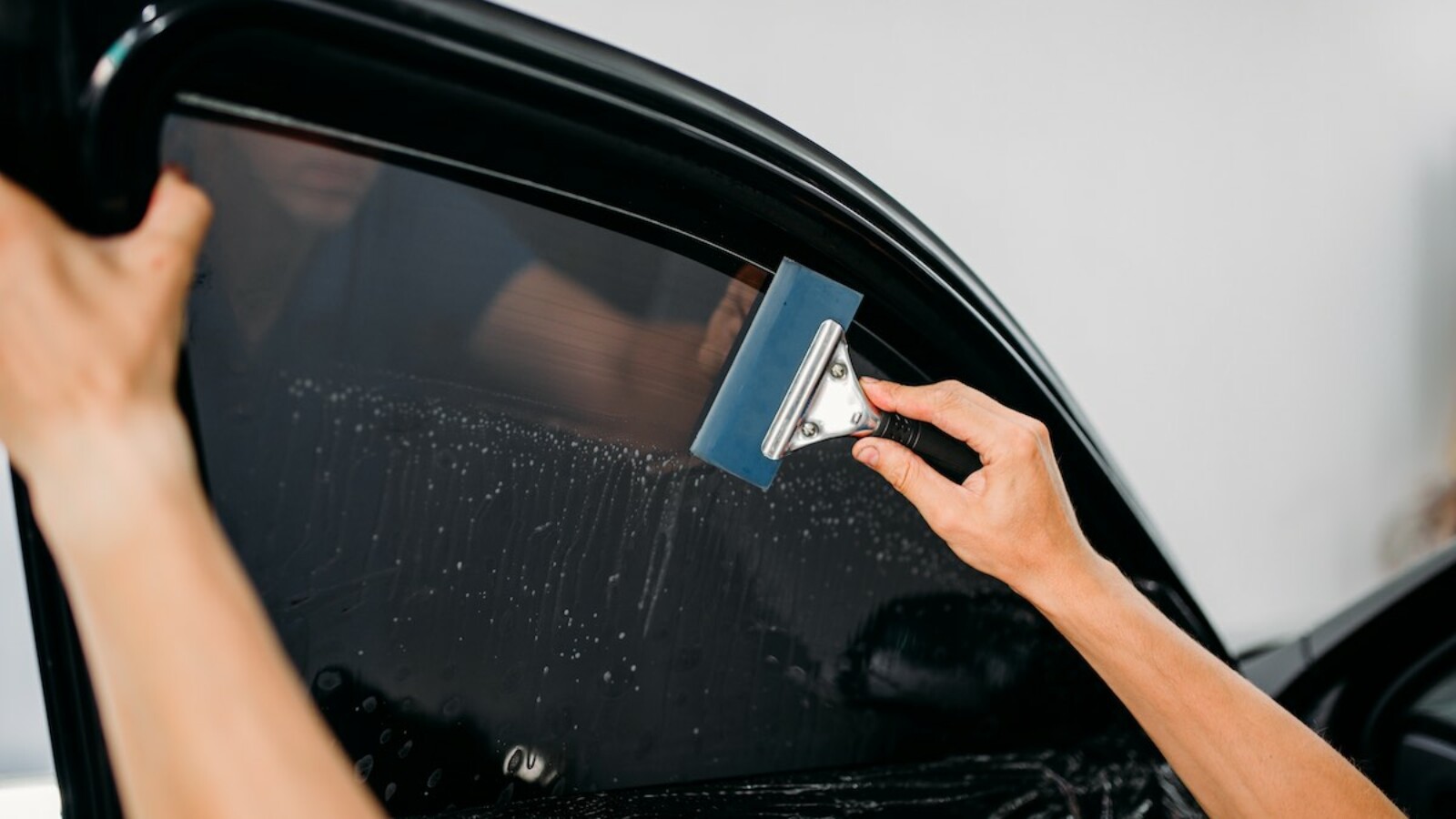
The three families, side by side
| Factor | Dyed | Carbon | Ceramic |
|---|---|---|---|
| Heat rejection | Lowest of the three, mostly shade effect | Middle, noticeably better in direct sun | Highest, strong infrared rejection even in lighter shades |
| Color stability | Can fade and turn purple over time | Stable matte color, resists fading well | Stable color, designed for long service |
| Signal interference | None, no metal content | None, carbon is non-metallic | None, ceramic is non-metallic |
| Glare and privacy | Good for the shade chosen | Good, with a flatter finish | Good, and available lighter while still cutting heat |
| Typical buyer | Budget first, looks first | Daily driver wanting a balance | Long commutes, parked outside, plans to keep the car |
Choosing by situation, not by brochure
If the car is a short-hop runabout that sleeps in a garage, dyed film in a legal shade may honestly be enough, and the money saved is real. If the car sits in an open Charlotte parking lot through workdays, the cabin heat load is the whole problem, and ceramic earns its premium every afternoon from May through September. Carbon sits in the sensible middle for many daily drivers: better heat and color life than dyed, without paying for the top tier.
Older metalized films, less common now, could interfere with phone, GPS, and tire sensor signals. All three families here are non-metallic, so signal worries should not drive the decision between them. What should drive it is years of ownership. A film you keep for a decade should be judged on fade behavior in year seven, not just shade on day one.
Questions to ask before you pick
Ask what the film's infrared and total solar rejection figures are at the legal shade for your windows, not at the darkest shade in the display. Ask what the warranty covers, specifically whether fading and color change are included, and whether the film can be removed cleanly later. Finally, look at a sample on glass in daylight rather than on a lit display board, because film color shifts between fluorescent light and Carolina sun. The right family becomes fairly clear once those answers are on the table.
How long each film keeps its look
Charlotte sun is the test none of these films can skip. A south-facing parking space delivers ultraviolet and heat for hours a day, and the difference between families shows up as slow color change rather than sudden failure. Dyed film may look fine for the first few years and then shift noticeably, at which point removal is the only cure. Carbon and ceramic films are built to hold their original color through that same exposure, which is why shops ask about how long you plan to keep the car. A vehicle traded in two years and a vehicle kept for ten should not automatically get the same film, and a good consultation separates those cases instead of selling the top tier to everyone.
Common questions
Is darker always cooler?
No. Construction matters as much as shade. A lighter ceramic film can reject more heat than a darker dyed film, which is why comparing rejection figures beats comparing shade numbers.
Will any of these films block my phone or GPS signal?
Dyed, carbon, and ceramic films are non-metallic, so they are not known for signal interference. Older metalized films were the usual source of that problem.
Why does old tint turn purple?
The dye in dyed film breaks down under ultraviolet exposure over years, shifting color. Carbon and ceramic films use more stable particles and resist that change much longer.
Photos in this guide are representative stock images.
← All guides from Underground window tinting← Back to Underground window tinting