Tinting a work truck is not the same appointment as tinting a sedan, even when the glass count is lower. Trucks in Charlotte earn their keep on job sites, gravel lots, and summer routes, and a first-time owner has to think about visibility with a trailer, dust that finds every film edge, and North Carolina rules that treat different vehicle classes differently. None of it is complicated once it is laid out in order.
This walkthrough follows a first tint job on a truck or work vehicle, step by step, with Underground window tinting as the local example of how a consultation covers the truck-specific questions before any film is cut.
Start with the vehicle's class and use
North Carolina sets light transmission limits for passenger cars, and applies rules differently to multipurpose vehicles, trucks, and vans, particularly for windows behind the driver. The front side windows still face the strictest expectations because the driver needs to see and be seen. Do not rely on a number a friend quoted for a different class of vehicle. A shop should confirm what applies to your truck, measure any existing factory glass, and write the chosen film's transmission down.
Use matters as much as class. A truck that tows needs rear visibility more than a truck that does not, especially at night on unlit ramps. A truck with a cap, rack, or toolbox already has a darker cargo view. Those facts shape shade choices more sensibly than a showroom display does.

The first-timer's appointment, step by step
- Bring the truck as it works: note towing habits, night driving, and whether the rear view is by mirror, camera, or both. That information decides how dark the rear glass should sensibly go.
- Confirm the rules for your vehicle class and have any factory privacy glass measured, so the film plus glass total is known before choosing a shade.
- Choose film by heat and durability, not darkness alone. Work trucks sit in open sun at job sites, so heat rejection and color-stable construction pay off daily.
- Clean-out before the appointment: remove gear, child seats, and window stickers from the glass area, and tell the shop about dust-heavy use so extra prep time can be planned.
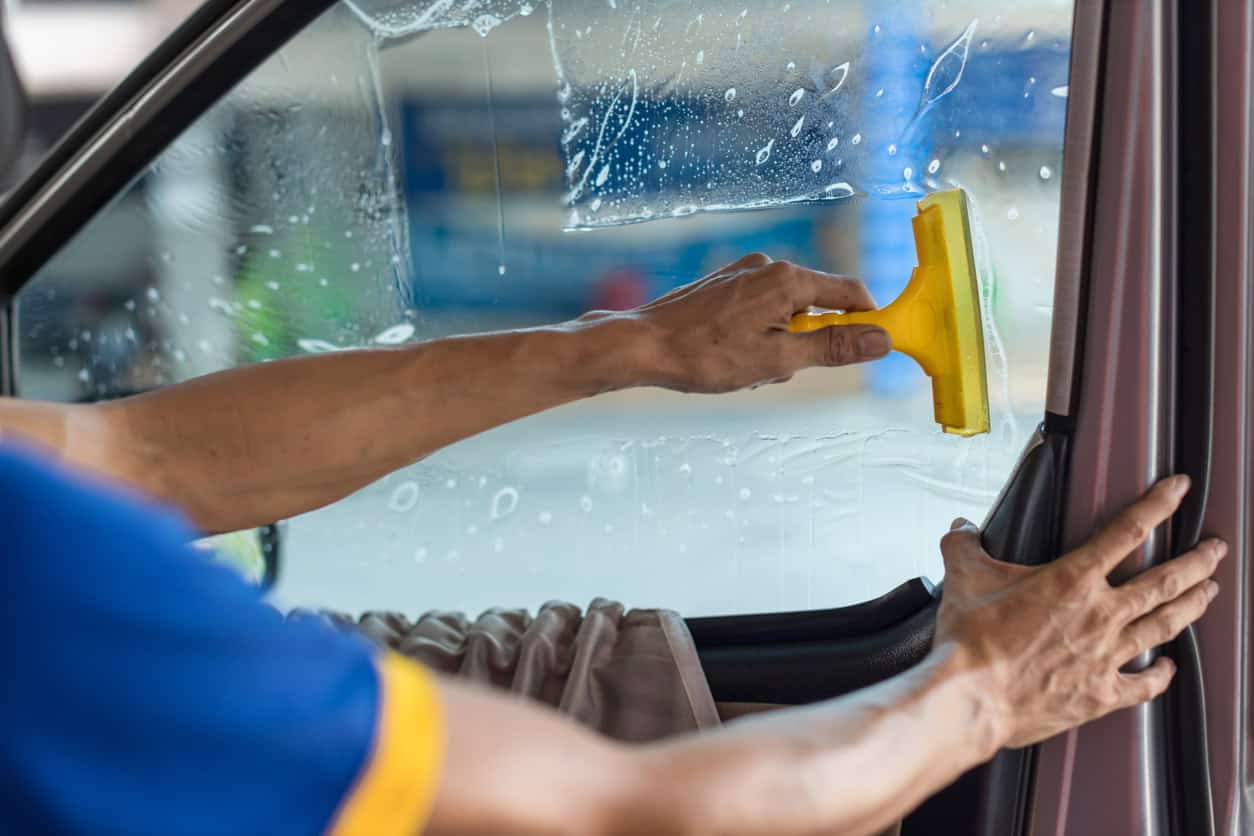
- At installation, expect the glass to be cleaned repeatedly. Job-site dust and silicone from work gear are common causes of specks under film if prep is rushed.
- Follow the cure rules with extra patience: keep windows up for the stated period, avoid slamming doors hard in the first days, and keep dust and grit away from window edges while the film bonds.
- After curing, clean with a soft microfiber cloth and non-ammonia cleaner, and wipe edges gently rather than scrubbing them, especially on windows that go up and down at gates and sites all day.
Job-site realities film has to survive
Work vehicles live dusty. Grit dragged across film by a window seal is the usual cause of vertical scratches, so rinsing heavy dust off glass before rolling a window down is a habit worth building. Seatbelts snap against door glass in trucks just as in cars, chipping film at the same height over and over. Loading tools through an open window or hatch can catch a film edge. None of this argues against tinting a truck. It argues for choosing a durable film, curing it fully before hard use, and treating the first week gently, after which film handles normal work life well.
Visibility is the deciding factor
The best work-truck tint is the one the driver forgets about at midnight in the rain. Heat cut during the day, glare reduced at low sun, and mirrors still useful at night is the target balance. If you tow after dark or back trailers on dim lots, say so plainly at the consultation, because that single fact should cap how dark the rear and rear-side glass goes. A good Charlotte shop will steer you there anyway, but a first-timer who raises it gets a truck set up for work, not just for looks.
Common questions
Are tint rules different for trucks than for cars in North Carolina?
Yes, in general the rules vary by vehicle class, especially for windows behind the driver. Have the shop confirm the limits for your specific truck before choosing a shade.
Will dark rear tint hurt towing visibility?
It can at night. If you tow or reverse trailers in low light, keep rear shades moderate and rely on mirrors and a camera, and raise it during the consultation.
Does job-site dust ruin new tint?
Dust is a prep and curing concern more than a long-term one. Thorough cleaning before installation and gentle treatment during the cure keep specks and edge problems rare.
Photos in this guide are representative stock images.
← All guides from Underground window tinting← Back to Underground window tinting